
Picture this: you land after a long flight, exhausted and juggling luggage, only to find your “driver” idling in a no-parking zone, unsure of your name, and fumbling with the GPS. Now picture the alternative a professional standing at arrivals with a name sign, your bags handled before you even ask, and a smooth, silent ride to your destination. That’s the difference between a chauffeur and a driver, and it’s bigger than most travelers realize.
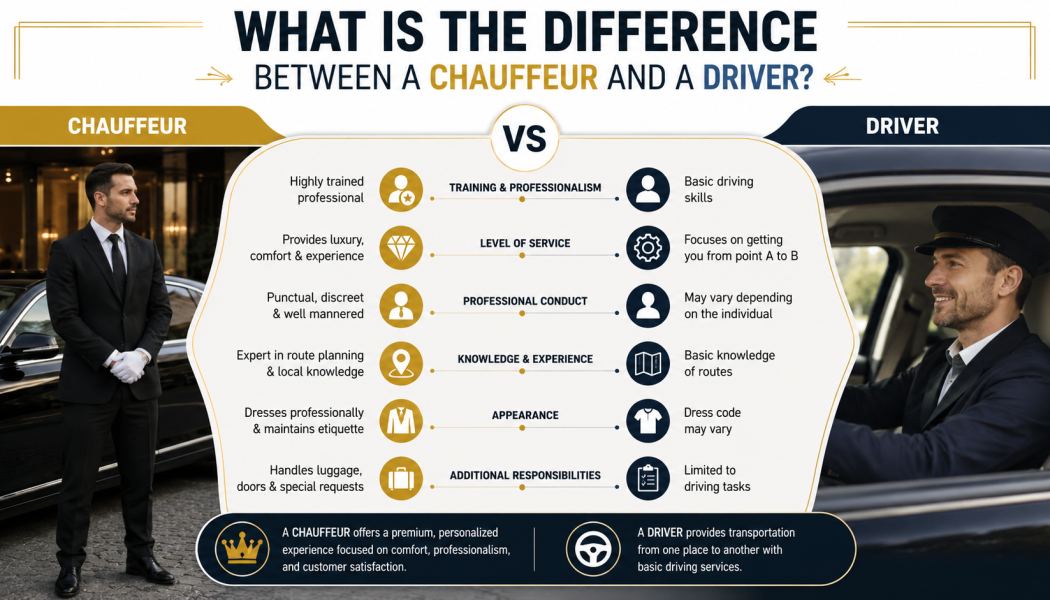
The terms get used interchangeably all the time, but they describe two very different experiences. A driver simply gets you from point A to point B. A chauffeur is trained in etiquette, safety, route planning, and hospitality turning a car ride into a service. If you’ve ever wondered why some ground transportation costs more, or why corporate travelers and event planners insist on “chauffeur service” rather than just a “car with a driver,” this article breaks it down.
We’ll walk through the training, licensing, vehicle standards, and customer experience that separate the two, along with real-world scenarios, a comparison table, a booking checklist, and answers to the questions travelers ask most. By the end, you’ll know exactly what you’re paying for and why it matters for your next airport transfer, corporate trip, or special event. If you’re planning an airport pickup, it also helps to understand how airport meet-and-greet services work before choosing between a professional chauffeur service and a standard driver.
What Is a Driver? Understanding the Basics
A driver, in the most general sense, is anyone licensed to operate a motor vehicle and transport passengers from one location to another. This includes rideshare drivers, taxi operators, and even a friend picking you up from the airport. The core requirement is simple: a valid driver’s license, a roadworthy vehicle, and basic knowledge of traffic laws. There’s no formal expectation of hospitality, dress code, or specialized training beyond what’s required to pass a standard driving test.
In practice, this means the quality of a ride with a “driver” can vary enormously. Some rideshare drivers are courteous and safe; others are distracted, unfamiliar with the area, or driving a vehicle that hasn’t been well maintained. Because platforms like Uber and Lyft onboard drivers with minimal vetting beyond a background check and vehicle inspection, the experience depends heavily on the individual behind the wheel. For a quick trip across town, this may be perfectly fine. But for business travel, airport transfers, or events where reliability and professionalism matter, a standard driver often isn’t built for the job.
What Is a Chauffeur? A Different Level of Service

A chauffeur is a professionally trained driver whose job extends far beyond operating a vehicle. Chauffeurs are trained in defensive driving, customer service, luggage handling, route optimization, and often in etiquette specific to corporate or VIP clients. Many hold commercial driver’s licenses or specialized permits, undergo continuous background checks, and are employed by licensed limousine or black-car companies rather than freelance platforms.
The chauffeur role is built around anticipation and discretion. A good chauffeur tracks your flight in real time, adjusts pickup timing for delays, opens doors, manages bags, and keeps the cabin quiet and climate-controlled to your preference. According to industry data from the Global Business Travel Association (GBTA), corporate travel managers are increasingly shifting budgets toward professional chauffeur services rather than rideshare, citing reliability and duty-of-care concerns as the primary drivers. This shift reflects a growing recognition that a chauffeur isn’t just transportation it’s a service designed around the passenger’s time, comfort, and safety.
Chauffeur vs Driver: Key Differences at a Glance
Understanding the gap between these two roles becomes clearer when you compare them side by side. The differences show up in training, professionalism, vehicle standards, and the overall experience and each of these factors affects what you’re actually paying for when you book ground transportation.
| Feature | Driver | Chauffeur |
| Licensing | Standard driver’s license | Commercial license, often with specialized permits |
| Training | Minimal or none | Defensive driving, hospitality, route planning |
| Vehicle | Personal or rideshare vehicle | Professionally maintained luxury fleet |
| Attire | Casual | Formal, professional dress code |
| Punctuality | Variable | Flight-tracked, guaranteed arrival windows |
| Discretion | Not typically trained | Trained in confidentiality and etiquette |
| Booking | On-demand app | Scheduled, dedicated service |
Training and Certification
Chauffeurs typically complete structured training programs covering vehicle handling, emergency response, and customer interaction protocols. Many companies require ongoing certification renewals, defensive driving courses, and first-aid training. Drivers, by contrast, usually only need to pass the standard licensing exam required by their state or country, with no ongoing professional development expected.
Professionalism and Etiquette
A chauffeur is trained to greet clients by name, maintain a neat appearance, and handle sensitive conversations with discretion useful for business travelers discussing confidential matters en route to a meeting. Drivers aren’t held to these standards, so the tone of the ride depends entirely on the individual’s personality and mood that day.
Vehicle Standards and Fleet Quality
The vehicle itself tells you a lot about the service you’re getting. Chauffeur companies typically maintain a dedicated fleet of sedans, SUVs, and executive vans that undergo regular inspections, detailing, and maintenance schedules. These vehicles are chosen specifically for passenger comfort think leather seating, climate control, phone chargers, and bottled water rather than for personal use. Travelers looking for executive-level comfort can also choose a premium Black Car Service NYC for business meetings, airport transfers, and special occasions.
A standard driver’s vehicle, especially in the rideshare world, is often a personal car that the owner also uses for daily errands, family trips, or other jobs. There’s no guarantee of consistent cleanliness, no dedicated inspection schedule, and the interior amenities depend entirely on what the owner happens to keep in the car. For example, a business traveler heading to a client meeting in a rideshare vehicle might arrive with wrinkled clothes from a cramped back seat, while the same trip in a chauffeured sedan offers legroom, a phone charger, and a quiet space to review notes before the meeting starts.
Safety, Licensing, and Insurance Standards
Safety is where the chauffeur-driver gap becomes most consequential. Professional chauffeur companies are typically licensed and insured at the commercial level, which includes higher liability coverage than a personal auto policy. The U.S. Department of Transportation requires commercial passenger transport companies to meet specific safety and insurance thresholds, and reputable limousine operators build their entire business model around meeting or exceeding those requirements.
Standard drivers, particularly in the gig economy, often operate under their personal auto insurance supplemented by a rideshare company’s contingent coverage which can leave gaps depending on when an incident occurs relative to a trip. This matters more than most passengers realize. If you’re traveling with family, attending a high-stakes business meeting, or simply want peace of mind, the insurance and licensing structure behind your ride is worth understanding before you book.
Background Checks and Vetting
Chauffeur companies typically conduct in-depth background checks, driving record reviews, and ongoing monitoring of their staff, since their business reputation depends on consistent safety. Rideshare platforms perform background checks too, but the vetting process is generally less rigorous and doesn’t include the same continuous performance monitoring that professional chauffeur companies maintain.
Customer Experience: What Sets Chauffeurs Apart

Beyond safety and training, the customer experience itself is where chauffeur service truly separates from standard driving. A chauffeur anticipates needs before you voice them adjusting the temperature, offering water, handling bags, and timing the route around traffic patterns or event schedules. This level of service is built into the job description, not left to chance.
Consider an event traveler heading to a wedding reception. A chauffeur will confirm the venue’s drop-off logistics in advance, coordinate timing with the event schedule, and ensure the vehicle is spotless for photos. A standard driver, especially one booked last-minute through an app, may not even know the venue has a specific entrance for formal events, leading to confusion or delays. These small details add up, especially for travelers who can’t afford a scheduling misstep corporate executives with back-to-back meetings, families managing young children and luggage, or tourists trying to make the most of limited time in a new city.
When Should You Hire a Chauffeur Instead of a Regular Driver?
Not every trip requires a chauffeur, but certain situations make the investment worthwhile. Booking a professional Chauffeur Service NYC is an excellent option for travelers who value punctuality, privacy, and a consistently high level of customer service. Business travel, airport transfers, special events, and any scenario involving tight schedules or high-stakes impressions all benefit from professional ground transportation. The predictability alone knowing your ride will be on time, clean, and handled by someone trained for the job removes a significant source of travel stress.
Leisure travelers and families also benefit more than they might expect. A chauffeur service means no navigating unfamiliar roads, no worrying about car seats or luggage space, and no uncertainty about whether the driver actually knows the route to a resort or attraction. For tourists unfamiliar with local traffic patterns or road signage, a knowledgeable chauffeur can also double as an informal local guide, pointing out landmarks or suggesting shortcuts around traffic.
Business Travel and Corporate Executives
Corporate travelers often need to work, take calls, or prepare for meetings during transit. A chauffeur provides a quiet, private environment suited for this, along with guaranteed punctuality that protects tight schedules.
Airport Transfers
Flight delays and gate changes are common, and a professional chauffeur service tracks your flight status and adjusts pickup timing accordingly something a standard rideshare booking typically can’t do.
Choosing a reliable airport transfer limo service helps ensure your pickup is professionally managed with real-time flight tracking and a smooth airport arrival experience.
Special Events and Weddings
Weddings, galas, and corporate events often require coordinated arrival times, formal presentation, and flexibility for last-minute schedule changes all areas where trained chauffeurs outperform standard drivers.
Cost Comparison: Chauffeur Services vs Rideshare/Taxi
It’s true that chauffeur services typically cost more than a standard rideshare or taxi ride, but the price reflects the added training, vehicle quality, insurance coverage, and guaranteed service standards. Rideshare pricing fluctuates with surge demand, meaning a short trip during peak hours can suddenly cost as much as a scheduled chauffeur ride without any of the added reliability.
For travelers who value predictability, many chauffeur companies offer flat-rate pricing with no surge fees, which makes budgeting for airport transfers or multi-stop corporate trips far easier. When you factor in the value of guaranteed punctuality, professional handling of luggage, and a stress-free ride, many business travelers find the price difference well worth it particularly for high-stakes trips where being late simply isn’t an option.
Professional Chauffeur Tips for Travelers
Getting the most out of a chauffeur service comes down to a few simple habits that experienced travelers swear by.
- Book in advance, especially for airport transfers or events, to guarantee vehicle availability and avoid last-minute surge pricing. Still deciding when to reserve your ride? Read whether you should book airport transportation in advance or on the same day to choose the best option for your travel plans.
- Share your flight number so the service can track delays and adjust pickup time automatically.
- Communicate special requests early child seats, extra luggage space, or specific vehicle preferences are easier to accommodate with notice.
- Confirm the meeting point at airports, since many terminals have designated pickup zones for professional ground transportation separate from rideshare lanes.
- Keep the chauffeur’s contact information handy in case plans change during the trip.
These small steps go a long way toward making sure your chauffeured ride runs exactly as smoothly as it’s designed to.
Common Mistakes to Avoid
Even experienced travelers make avoidable mistakes when booking ground transportation. Recognizing these ahead of time can save both money and frustration.
- Booking last-minute without confirming vehicle availability, which often leads to inflated prices or limited vehicle options.
- Assuming all “chauffeur” listings are equal some rideshare-style apps use the term loosely without the training or vetting behind it.
- Not confirming meet-and-greet details at airports, leading to confusion about where to meet your driver.
- Ignoring vehicle insurance and licensing when comparing quotes, which can leave you underinsured in the rare event of an incident.
- Overlooking cancellation policies, which can vary significantly between rideshare apps and professional chauffeur companies.
Avoiding these pitfalls starts with asking the right questions before you book which brings us to a simple checklist.
Checklist: How to Choose the Right Chauffeur Service
Before booking your next ride, run through this quick checklist:
- Is the company licensed and commercially insured?
- Are chauffeurs background-checked and professionally trained?
- Does the service track flights for airport pickups?
- Is pricing flat-rate or subject to surge fees?
- Are vehicles regularly inspected and well-maintained?
- Does the company offer 24/7 booking support?
- Are cancellation and rescheduling policies clearly stated?
- Can the service accommodate special requests (child seats, extra stops, accessibility needs)?
If a provider checks all these boxes, you’re likely looking at genuine chauffeur service rather than a rebranded rideshare option. Before making your reservation, it’s also helpful to understand what to look for before booking an airport car service so you can compare providers with confidence.
Why Choose Vision Limo Group?
At Vision Limo Group, the distinction between a driver and a chauffeur isn’t just marketing language it’s the foundation of how the company operates. Every chauffeur is professionally trained, background-checked, and dressed to represent the standard that business travelers, families, and event guests expect. Vehicles are maintained on a strict inspection schedule, and flight tracking is built into every airport transfer to keep pickup times accurate even when flights run late.
Whether you’re a corporate executive heading to back-to-back meetings, a family arriving for a vacation, or an event traveler needing a polished arrival, Vision Limo Group builds each ride around punctuality, comfort, and professionalism the qualities that separate a true chauffeur experience from an ordinary car ride.
Conclusion: Book the Ride That Matches Your Standards
The difference between a chauffeur and a driver comes down to training, professionalism, vehicle standards, and the overall experience behind the wheel. For a casual trip across town, a standard driver might be all you need. But for airport transfers, corporate travel, weddings, and events where punctuality and presentation matter, a professional chauffeur service delivers a level of reliability and comfort that a standard ride simply can’t match.
If your next trip calls for more than just a ride, book your airport transportation with Vision Limo Group and experience what professional chauffeur service really feels like from pickup to drop-off.
Frequently Asked Questions
1. What is the main difference between a chauffeur and a driver?
A chauffeur is professionally trained in safety, etiquette, and hospitality, while a driver simply operates a vehicle to get passengers from one place to another with no formal service training.
2. Is a chauffeur more expensive than a taxi or rideshare?
Generally, yes, but chauffeur services often use flat-rate pricing without surge fees, which can make costs more predictable, especially for airport transfers and events.
3. Do chauffeurs need special licenses?
Many chauffeurs hold commercial driver’s licenses or specialized permits required by their local transportation authority, in addition to completing company-specific training programs.
4. Can I request a specific vehicle type from a chauffeur service?
Yes, most professional chauffeur companies offer a range of vehicles, from sedans to SUVs to executive vans, and allow you to select based on group size and preference.
5. How early should I book a chauffeur for an airport transfer?
Booking at least 24 to 48 hours in advance is recommended, especially during peak travel seasons, to guarantee vehicle availability.


